
A Year of Aerobic Exercise Lowered the Stress Hormone Cortisol in Healthy Adults Aged 26 to 58
Journal of Sport and Health Science March 17, 2026
What the researchers wanted to know
Does a year of regular aerobic exercise lower the body's signs of stress and its markers of heart disease risk in healthy adults, compared with no exercise program?
Why it matters
Exercise lowers the risk of heart disease by more than its effects on cholesterol, blood sugar and blood pressure can explain. One idea is that exercise also calms the body's stress systems. That had mostly been studied in short experiments, not in a long trial.
Cortisol is the body's main stress hormone. It rises during stress and helps the body respond. Staying high for long periods is linked to heart disease and low mood.
Cortisol in blood or saliva changes from hour to hour. Hair soaks up cortisol slowly as it grows, so a small sample of hair shows a person's average cortisol level over the past few months.
The recommended amount of exercise for adults is 150 minutes a week at a moderate to hard effort.
130 healthy adults aged 26 to 58 were randomly split into two groups for 12 months:
- Exercise: 150 minutes a week of moderate-to-hard aerobic exercise.
- Comparison: health information only, with no exercise program.
Before and after, the researchers measured:
- cortisol in hair
- heart rate variability, a sign of how relaxed the body is
- blood fats, long-term blood sugar and artery stiffness
- two blood markers of inflammation
- brain activity, blood pressure and feelings during stressful and emotional tasks in a brain scanner
The plan and its measurements were registered before the trial began.
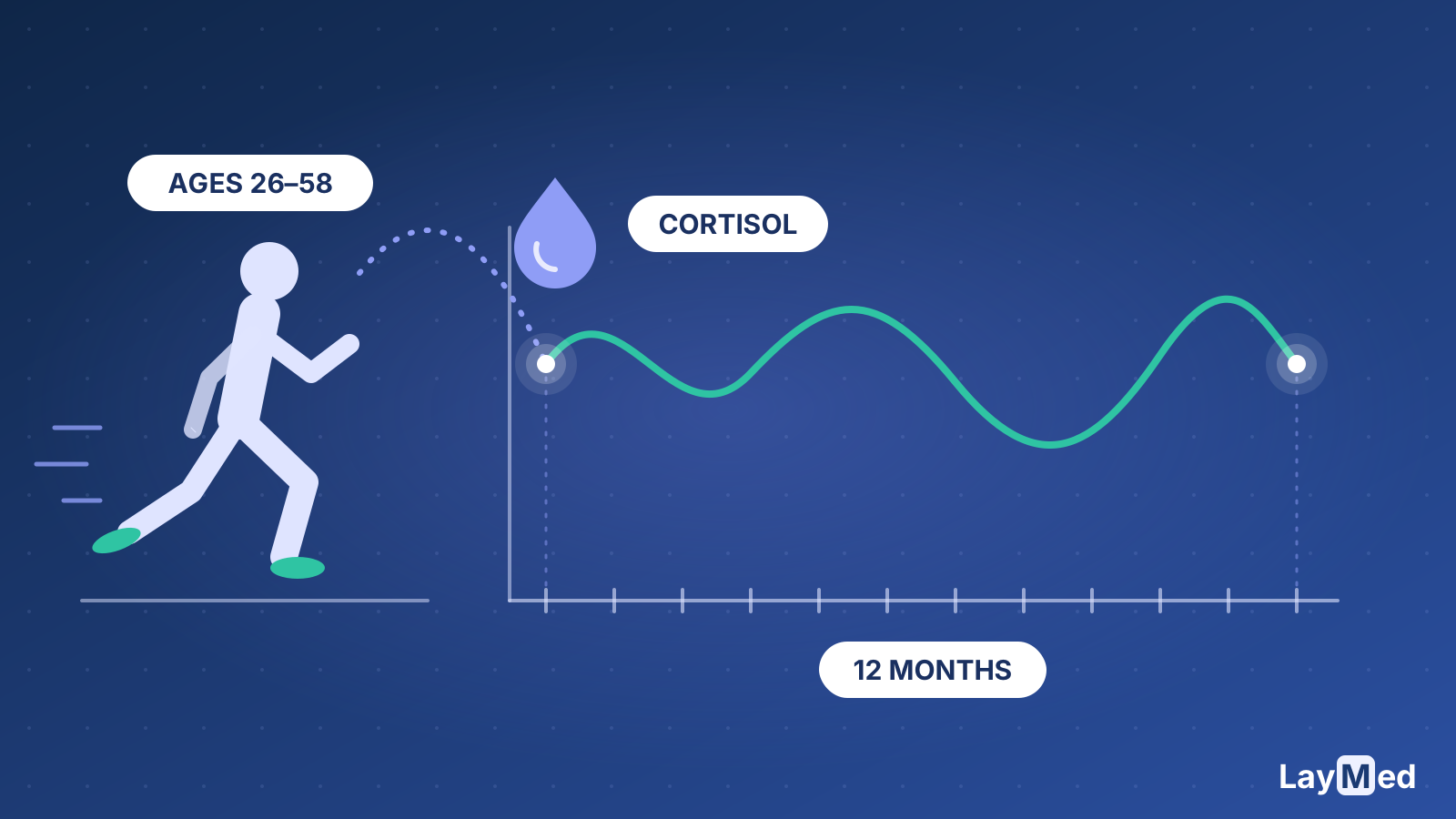
The exercise group's long-term cortisol fell compared with the comparison group. Nothing else that was measured changed consistently.
- Hair cortisol: dropped in the exercise group relative to the comparison group (a gap of 0.62 on the study's scale, with the true gap likely between 0.10 and 1.14). The result held when only people who stuck to the program were counted.
- Fitness: improved in the exercise group.
- No consistent change in blood fats, long-term blood sugar, artery stiffness, heart rate variability, inflammation, or in brain, blood pressure and emotional responses to the stress tasks.
41 people in the exercise group and 40 in the comparison group came back for the final measurements.
Conclusion
A year of 150 minutes a week of aerobic exercise lowered long-term cortisol in healthy adults, without changing other signs of stress or heart disease risk.
Therefore
Lower cortisol may be one of the ways regular aerobic exercise benefits long-term health.
How much can you trust this study?
Two studies can say the same thing and deserve very different amounts of trust. LayMed scores every study out of 100 on:
- Study design
- Bias Control & Transparency
- Size and precision
- Measurement
LayMed Plus members see the Study Quality score for every study, with the reason behind each part.
Get LayMed Plus$7.99 a month or $79 a year
How far does this apply to you personally?
A study can earn a high quality score and still not apply well to you. How much its results carry over to you can change a lot depending on your sex, age, race or ethnicity, body weight, genes, hormones, blood pressure and resting heart rate, health conditions, medications, activity level, training experience, diet, sleep, smoking and drinking, job and gut bacteria.
Hover over or tap any of these to see a real study where it changed the results.
LayMed Plus members get a personal Relevance score for every study. It weighs all of these factors to estimate how well the results apply to you and your life.
Get LayMed Plus$7.99 a month or $79 a year
Important new studies, explained in plain English, sent straight to your inbox.
Almost done. Please check your email for a confirmation sent from "laymed@dr-gains.com".
Last checked against the source: November 20, 2026
Update November 20, 2026: Written to the LayMed article standard from the full published paper.
LayMed articles are plain-English summaries of published research, written for education. They are not medical advice. Always read the original study and talk to a qualified professional about your own situation.