Resting Metabolism and Thyroid Hormones Recovered Within 12 Weeks After Contest Dieting in 19 Natural Physique Athletes, as Body Fat Returned
Original study: Post-competition recovery in natural physique athletes: body composition, metabolic adaptation, and refeeding responses
Journal of the International Society of Sports Nutrition May 23, 2026
What the researchers wanted to know
What happens to body fat, muscle, resting metabolism, hormones and mood while physique athletes diet for a competition and in the 12 weeks afterwards, and does how much they eat afterwards change the recovery?
Why it matters
Dieting to very low body fat slows metabolism and lowers hormone levels. Many athletes fear the damage is lasting, and advice on how fast to raise food intake afterwards is based on little evidence.
Physique athletes compete in bodybuilding-type contests judged on muscle and leanness. They diet for months to reach very low body fat. "Natural" means they do not use performance-enhancing drugs.
Resting metabolic rate is the energy your body burns at complete rest. During long diets it can fall by more than the loss of body weight explains. This is called metabolic adaptation.
Thyroid hormones help set how fast the body burns energy.
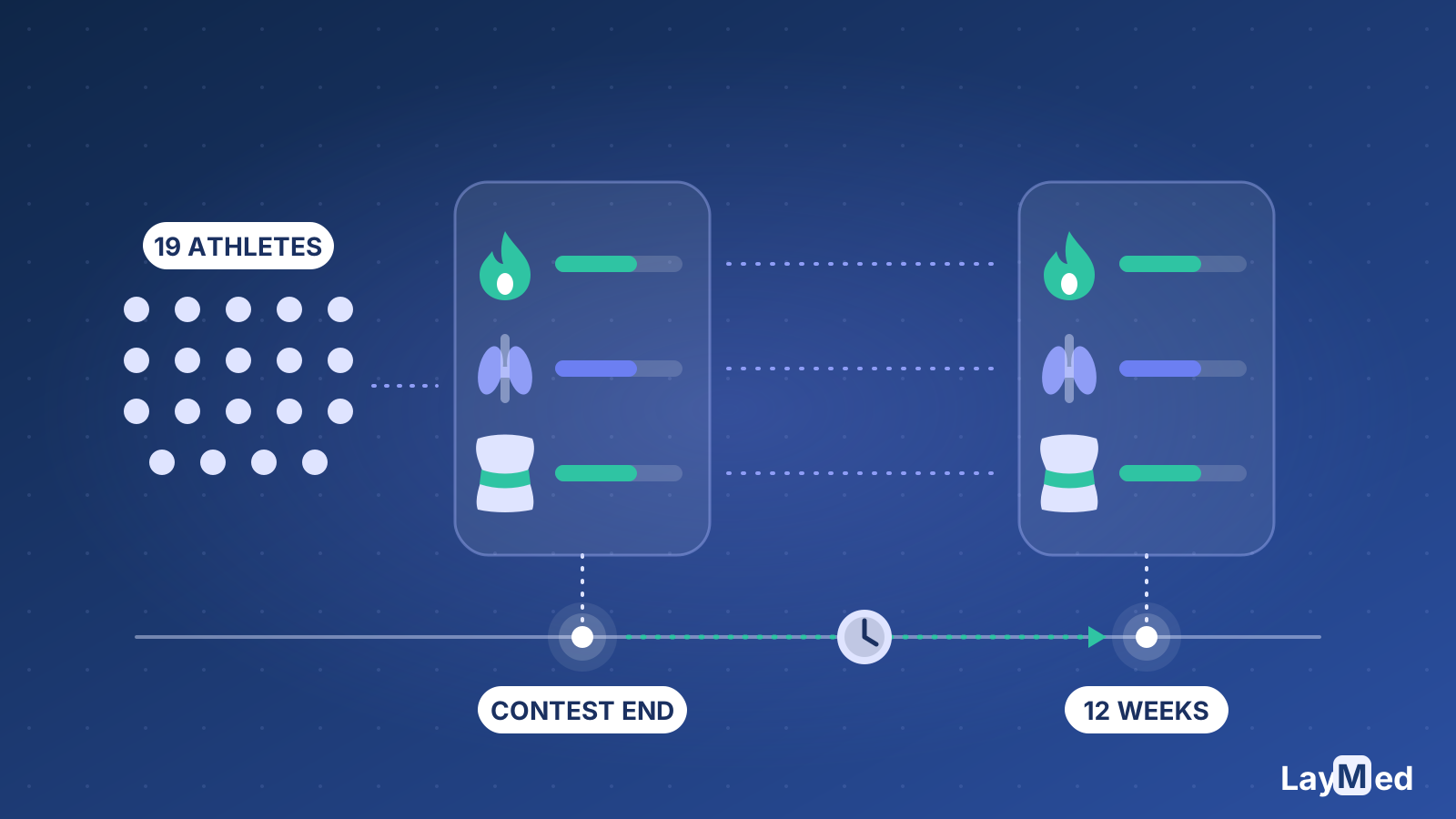
The researchers followed 19 athletes at two Australian laboratories. They did not tell the athletes how to diet or eat afterwards. They measured what happened.
Tests were done at five points:
- About 21 weeks before competition
- 1 to 2 weeks before the final competition
- 2, 6 and 12 weeks after it
Each visit included a body scan for fat and lean mass, resting metabolic rate from breath measurements, thyroid hormones from blood, a strength test, and questionnaires on mood, sleep and eating. Athletes logged their own food and training.
Body weight change (kg)
The diet lowered body fat and thyroid hormones, and both recovered within 12 weeks.
During the diet:
- Body weight fell by 7.1 kg: 5.8 kg of fat and 1.7 kg of lean mass.
- Thyroid hormones fell.
- Resting metabolism, per kg of lean mass, showed a small and uncertain drop.
- Mood and sleep got worse. Strength held up.
After the competition:
- Weight rose by 6.6 kg within 6 weeks and 8.3 kg within 12 weeks.
- At 12 weeks, body fat was back near its starting level and lean mass was 1.6 kg above it.
- Resting metabolism rose, and thyroid hormones were back in the normal range.
- Mood and sleep improved.
Athletes who raised their food intake more recovered their resting metabolism faster, and regained fat at the same time.
Conclusion
Contest dieting lowered thyroid hormones and slightly lowered resting metabolism in physique athletes, and both recovered within 12 weeks as food intake and body fat returned.
Therefore
Athletes finishing an extreme diet may recover faster by raising food intake in a planned way and accepting fat regain, instead of staying restricted.
How much can you trust this study?
Two studies can say the same thing and deserve very different amounts of trust. LayMed scores every study out of 100 on:
- Study design
- Bias Control & Transparency
- Size and precision
- Measurement
LayMed Plus members see the Study Quality score for every study, with the reason behind each part.
Get LayMed Plus$7.99 a month or $79 a year
How far does this apply to you personally?
A study can earn a high quality score and still not apply well to you. How much its results carry over to you can change a lot depending on your sex, age, race or ethnicity, body weight, genes, hormones, blood pressure and resting heart rate, health conditions, medications, activity level, training experience, diet, sleep, smoking and drinking, job and gut bacteria.
Hover over or tap any of these to see a real study where it changed the results.
LayMed Plus members get a personal Relevance score for every study. It weighs all of these factors to estimate how well the results apply to you and your life.
Get LayMed Plus$7.99 a month or $79 a year
Important new studies, explained in plain English, sent straight to your inbox.
Almost done. Please check your email for a confirmation sent from "laymed@dr-gains.com".
Last checked against the source: November 20, 2026
Update November 20, 2026: Written to the LayMed article standard from the full published paper.
LayMed articles are plain-English summaries of published research, written for education. They are not medical advice. Always read the original study and talk to a qualified professional about your own situation.