
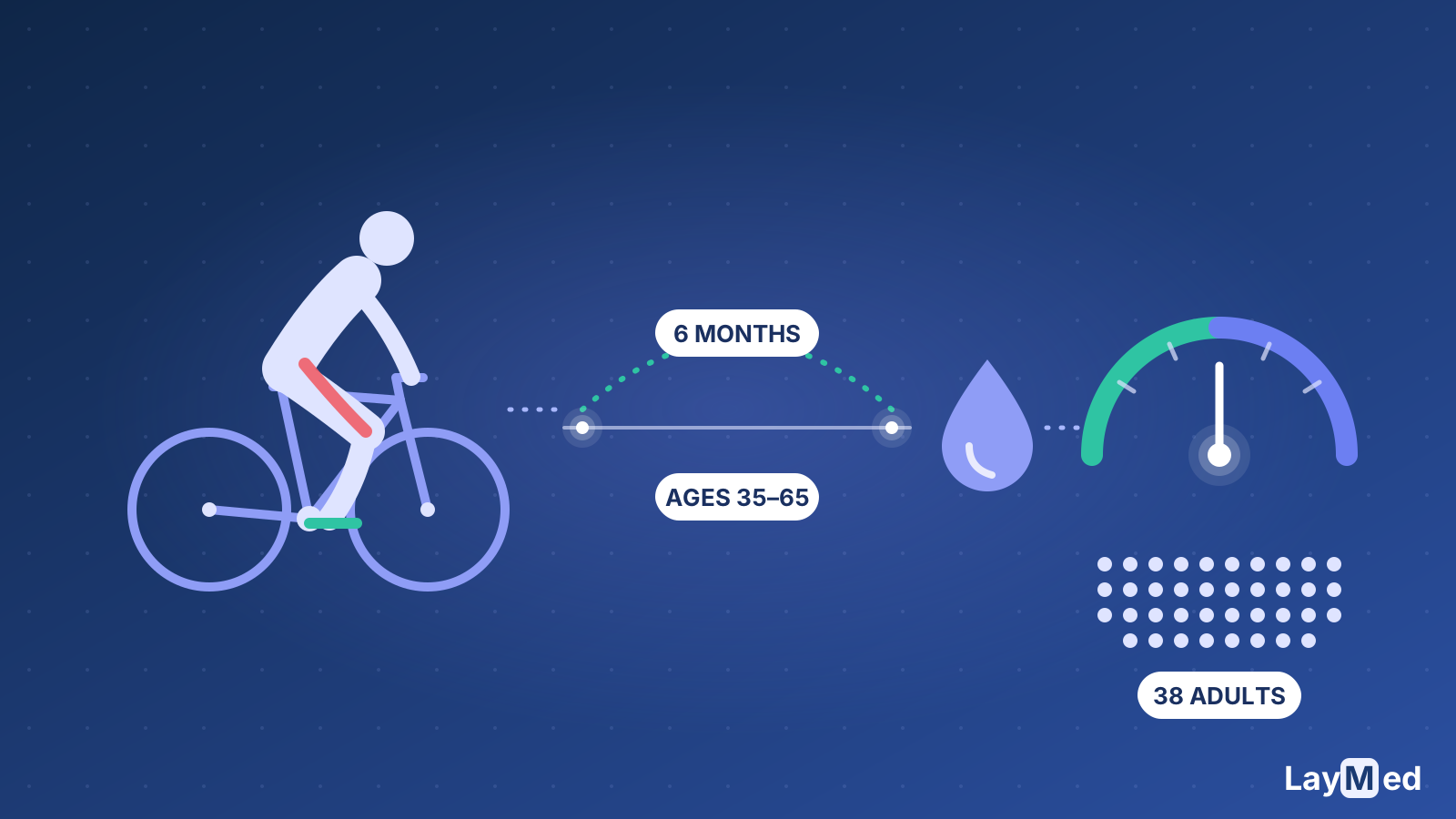
Six Months of Cycling Training Lowered a Blood-Based Biological Age Score by 7 Months in 38 Adults Aged 35 to 65
Original study: Epigenetic age deceleration reflects exercise-induced cardiorespiratory fitness improvements
GeroScience January 17, 2026
What the researchers wanted to know
Can a blood test that estimates biological age pick up the effect of six months of endurance training?
Why it matters
Testing whether a habit helps people live longer takes decades. A blood marker that responds within months would let researchers judge such habits much sooner. It was unclear whether these tests respond to short programs at all.
Your biological age is an estimate of how old your body seems, which can differ from your age in years.
An epigenetic clock estimates it from chemical tags on the DNA in blood cells. These tags change in a regular way as people age. The clock used here is called GrimAge. It was built to predict how long people live.
VO2 max is the most oxygen your body can use during hard exercise. It is the standard measure of aerobic fitness.
The researchers enrolled 42 adults for a six-month cycling program in 2023.
- Each person followed a personal plan set from a fitness test, checked by a coach every two weeks.
- Training grew by about 10% a week for the first three months and averaged 4.5 hours a week.
- Blood was taken and fitness and body fat were measured before and after.
38 people finished. The main analysis used the 33 who did at least two thirds of their training.
Everyone trained. There was no comparison group that did not exercise.
The biological age score fell and fitness rose.
- Biological age score: 7.4 months lower than expected for the time that had passed
- VO2 max: 20% higher
- Body composition: improved
People who gained more fitness had larger drops in the score. Fitness gains accounted for 27% of the differences between people. Changes in body fat did not track with the score.
The score also moved with the mix of white blood cells in each sample. That mix accounted for 74% of the differences between people. It shifts with infections and other everyday factors.
Conclusion
Six months of cycling training lowered a blood-based biological age score by about 7 months, in step with gains in aerobic fitness.
Therefore
Raising aerobic fitness may lower this kind of biological age score, and a single test result could be swayed by the mix of white blood cells in the sample.
How much can you trust this study?
Two studies can say the same thing and deserve very different amounts of trust. LayMed scores every study out of 100 on:
- Study design
- Bias Control & Transparency
- Size and precision
- Measurement
LayMed Plus members see the Study Quality score for every study, with the reason behind each part.
Get LayMed Plus$7.99 a month or $79 a year
How far does this apply to you personally?
A study can earn a high quality score and still not apply well to you. How much its results carry over to you can change a lot depending on your sex, age, race or ethnicity, body weight, genes, hormones, blood pressure and resting heart rate, health conditions, medications, activity level, training experience, diet, sleep, smoking and drinking, job and gut bacteria.
Hover over or tap any of these to see a real study where it changed the results.
LayMed Plus members get a personal Relevance score for every study. It weighs all of these factors to estimate how well the results apply to you and your life.
Get LayMed Plus$7.99 a month or $79 a year
Important new studies, explained in plain English, sent straight to your inbox.
Almost done. Please check your email for a confirmation sent from "laymed@dr-gains.com".
Last checked against the source: November 20, 2026
Update November 20, 2026: Written to the LayMed article standard from the full published paper.
LayMed articles are plain-English summaries of published research, written for education. They are not medical advice. Always read the original study and talk to a qualified professional about your own situation.