
Ashwagandha Kept Stress Hormones From Rising During Pre-Season Training in a 6-Week Trial of 56 Team-Sport Athletes
Original study: Ashwagandha Root Extract Stabilises Physiological Stress Responses in Male and Female Team Sports Athletes During Pre-Season Training
Nutrients January 12, 2026
What the researchers wanted to know
Does taking ashwagandha root extract during pre-season training change stress hormones, how recovered athletes feel, strength and aerobic fitness in male and female team-sport athletes?
Why it matters
Pre-season is the hardest training block of an athlete's year. Stress hormones climb and recovery suffers. Ashwagandha is widely sold for stress and recovery, but there were few controlled trials in athletes, and almost none that looked at men and women separately.
Ashwagandha is a herb used for centuries in traditional Indian medicine. Its root extract is sold as a supplement for stress, sleep and strength.
Cortisol is the body's main stress hormone. Cortisone is its inactive form; the body switches between the two. Both can be measured in saliva, and both rise when training load piles up faster than the body recovers.
Recovery is often tracked with a short daily questionnaire in which athletes rate their sleep, stress, tiredness and muscle soreness.
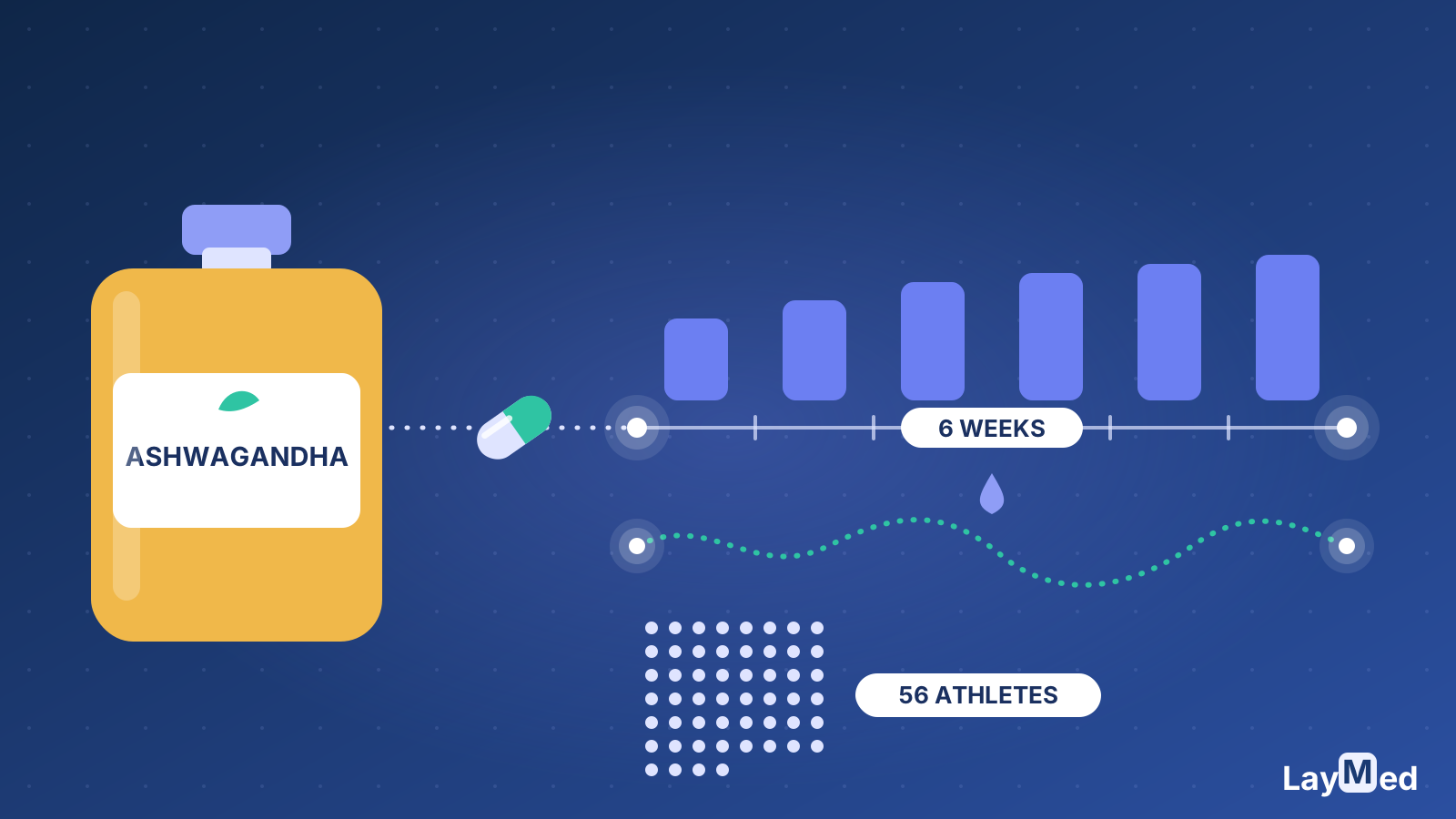
56 team-sport athletes were randomly split into two groups of 28, each with 14 men and 14 women, for 42 days of pre-season training in the summer heat:
- Ashwagandha: 600 mg a day of a branded root extract (KSM-66), taken with dinner.
- Comparison: a capsule of chickpea flour that looked the same.
Neither the athletes nor the researchers knew who was taking which, so expectations could not sway the results.
At the start and end, the researchers collected saliva after evening training to measure cortisol, cortisone, testosterone and other hormones. Athletes filled in the recovery questionnaire the next day. Strength was tested with squat, bench press, deadlift, power clean, pull-ups, grip and jump tests, and aerobic fitness with a 1.2 km shuttle run.
Stress hormones rose in athletes taking the dummy capsule and stayed steady in those taking ashwagandha, but the pattern differed between women and men and most strength measures did not change.
Women:
- Cortisol rose clearly in the comparison group and not in the ashwagandha group.
- The ashwagandha group reported better overall recovery, less muscle soreness and less tiredness.
Men:
- Cortisone rose clearly in the comparison group and not in the ashwagandha group. Cortisol itself did not differ between groups.
- Jump height improved in the ashwagandha group. Pull-ups improved in both groups.
- How recovered the men felt did not change.
No difference between groups in testosterone, in the heaviest squat, bench press, deadlift or power clean, or in the shuttle run.
One athlete on ashwagandha had a mild headache and one on the dummy capsule had mild stomach discomfort. Three athletes dropped out because of scheduling.
Conclusion
Six weeks of 600 mg a day of ashwagandha root extract appeared to keep stress hormones from rising during pre-season training, with women also reporting better recovery and men jumping higher.
Therefore
Ashwagandha may help team-sport athletes handle the stress of a heavy training block, with effects that may differ between men and women.
How much can you trust this study?
Two studies can say the same thing and deserve very different amounts of trust. LayMed scores every study out of 100 on:
- Study design
- Bias Control & Transparency
- Size and precision
- Measurement
LayMed Plus members see the Study Quality score for every study, with the reason behind each part.
Get LayMed Plus$7.99 a month or $79 a year
How far does this apply to you personally?
A study can earn a high quality score and still not apply well to you. How much its results carry over to you can change a lot depending on your sex, age, race or ethnicity, body weight, genes, hormones, blood pressure and resting heart rate, health conditions, medications, activity level, training experience, diet, sleep, smoking and drinking, job and gut bacteria.
Hover over or tap any of these to see a real study where it changed the results.
LayMed Plus members get a personal Relevance score for every study. It weighs all of these factors to estimate how well the results apply to you and your life.
Get LayMed Plus$7.99 a month or $79 a year
Important new studies, explained in plain English, sent straight to your inbox.
Almost done. Please check your email for a confirmation sent from "laymed@dr-gains.com".
Last checked against the source: November 20, 2026
Update November 20, 2026: Written to the LayMed article standard from the full published paper.
LayMed articles are plain-English summaries of published research, written for education. They are not medical advice. Always read the original study and talk to a qualified professional about your own situation.